The style name describes the package
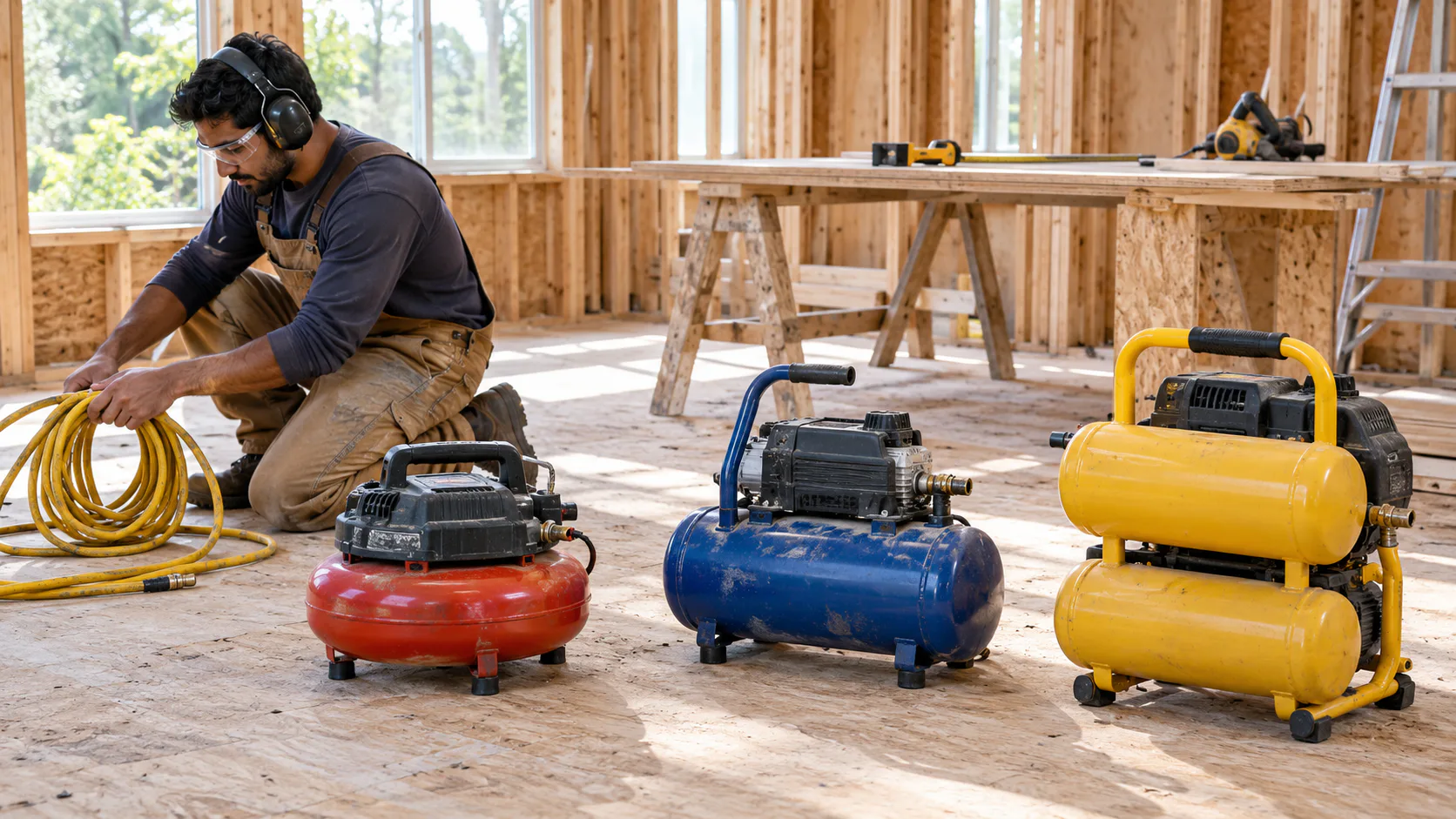
Pancake, hot dog and twin stack describe the tank arrangement. They help a buyer picture the footprint, handle position and storage shape. They do not replace the model's published air-delivery rating.
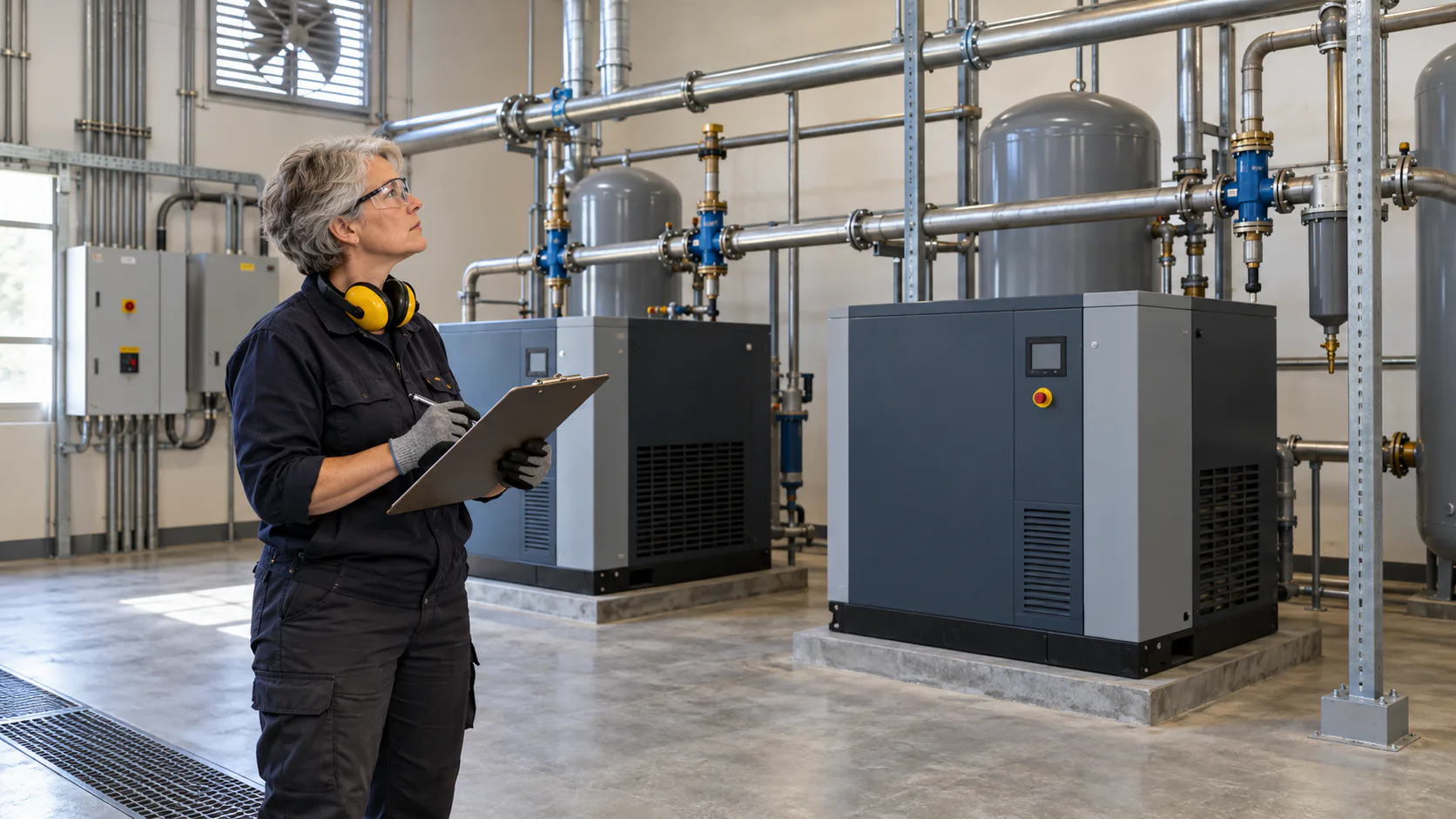
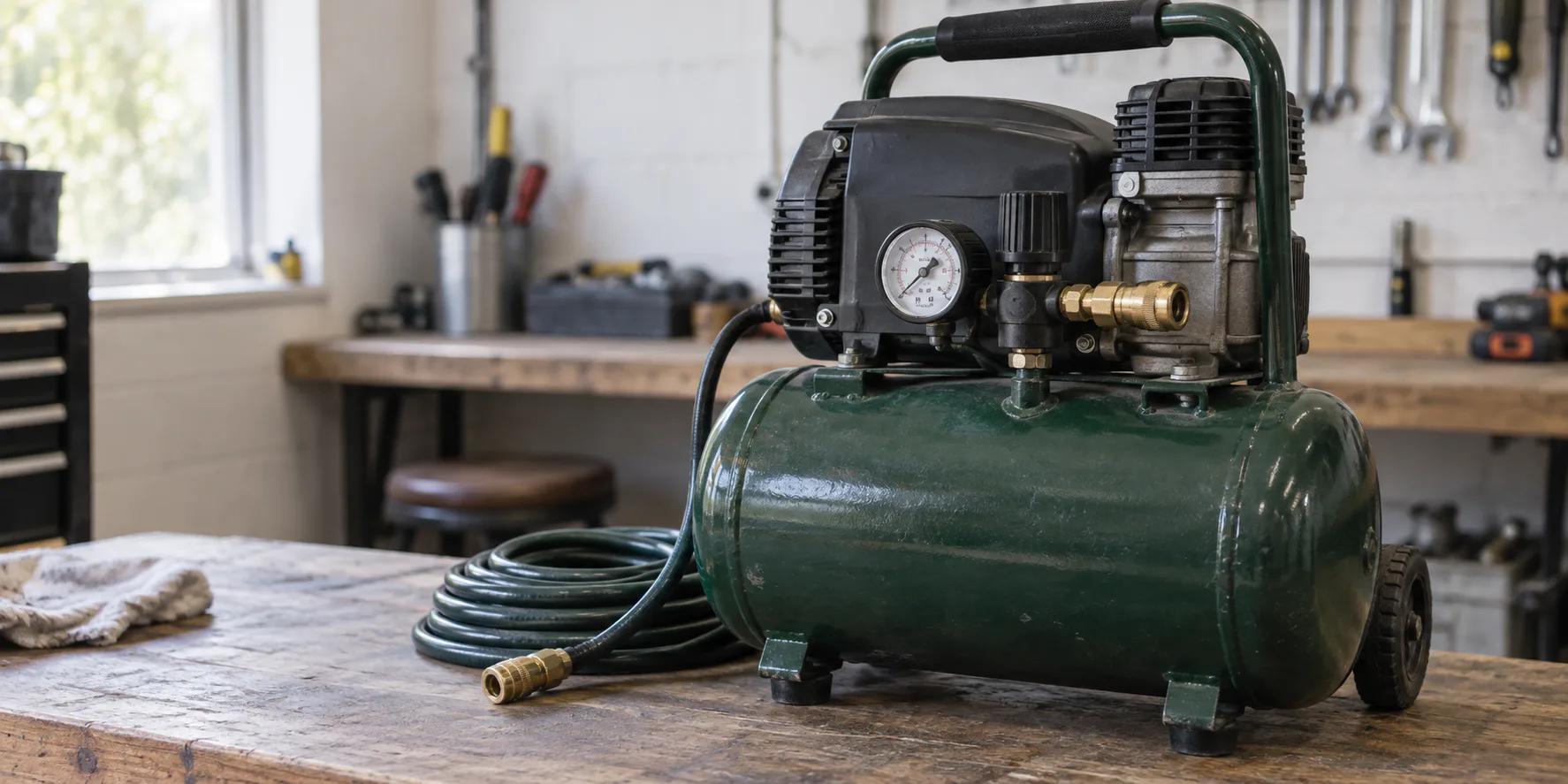
A pancake unit places the pump above a flat round tank. A hot-dog unit uses one horizontal cylinder. A twin-stack unit uses two horizontal cylinders in a compact frame. Larger compressors may use one horizontal or vertical receiver without falling into the three portable nicknames.
Exact manufacturer-labelled examples
| Compressor | Manufacturer-supported style | Published delivery |
|---|---|---|
| Metabo HPT EC914S | Pancake | 4 CFM at 90 PSI |
| PORTER-CABLE C2002 | Pancake | 2.6 SCFM at 90 PSI |
| Metabo HPT EC28M | Hot Dog | 0.8 CFM at 90 PSI |
| Metabo HPT EC99S | Twin Stack | 3.1 CFM at 90 PSI |
| Ingersoll Rand P1IU-A9 | Twin Stack | 4.3 CFM at 90 PSI |
| DEWALT DXCM201 | Horizontal | 6.2 CFM at 90 PSI |
| DEWALT DXCMLA4708065 | Vertical | 14 CFM at 90 PSI |
These rows show why the category cannot predict output. The EC914S pancake rating is higher than the EC99S twin-stack rating, while the P1IU-A9 twin stack is higher than both. The C2002 retains its maker's SCFM label and is not numerically ranked against the CFM rows without the standard-condition details needed for a conversion.
The DEWALT DXCMS20045US does not appear in this table because its exact manufacturer page does not classify it as horizontal. A plausible photograph or product shape is not enough to assign a source field.
Delivery rating answers a different question
Tank style tells you how the unit is packaged. Delivery at the required pressure is the figure needed for an airflow comparison.
For a tool published at 90 PSI, find the compressor's delivered CFM or SCFM at 90 PSI. Keep the unit label intact, then inspect the tool's own field label. Do not use maximum tank PSI or tank gallons as a substitute for delivered airflow.
The pancake-compressor output directory keeps the exact output and pressure beside each qualifying model. The matcher can compare one selected tool field and compressor record at the same stated pressure.
What stored volume changes
The receiver stores compressed air. More stored volume can extend a short demand peak before system pressure falls toward what the pump can continuously replace. It does not increase the pump's published delivery rate.
That distinction explains why two compressors with similar delivery can feel different during intermittent work. One may provide a longer stored-air buffer, but sustained use still returns to pump output, operating pressure and duty-cycle limits.
Atlas Copco publishes a receiver-sizing rule of thumb of roughly 3 to 4 gallons for each CFM of compressed air required. The same page says the result depends on compressor type and application and that the simplified formula quickly reaches its limits. Use it for its stated receiver-sizing context, not as a universal answer for a portable nailer, sander or grinder.
Footprint and handling questions
Once the airflow evidence works, compare how the exact machine fits the shop or job:
- Will the footprint fit the storage shelf, truck or work area?
- Can the unit be carried or rolled safely using its supplied handle and frame?
- Are the regulator, outlets and drain reachable in the intended location?
- Does the manual require clearance for cooling or service?
- Is the electrical supply suitable for that exact compressor?
A low pancake package may store differently from a long hot-dog tank. A twin-stack frame may concentrate similar stored volume into a shorter package. Those are layout questions, not universal rankings of stability, output or durability.
PORTER-CABLE specifically describes the C2002's pancake-style tank as stable. That is a claim about that model, not proof that every pancake compressor is more stable than every horizontal or twin-stack design.
Condensation and drain access
Water condenses as compressed air cools in the receiver. Atlas Copco identifies reduced usable storage volume, internal corrosion and condensate entering distribution lines as possible consequences of accumulation.
The safe drain procedure is model-specific. Check the manual for depressurizing, drain location, drain frequency and any service restrictions. Do not reach underneath or open a drain on a pressurized unit unless the manufacturer procedure explicitly calls for it.
When comparing two compressors, look at drain access in the actual installation position. A tank style may suggest where space is tight, but only the exact model layout and manual show how it must be maintained.
A practical buying order
- Start with the tool's exact published field, unit and operating pressure.
- Find compressor delivery at that same pressure.
- Check the compressor duty cycle against the planned run time.
- Decide how much stored-air buffer the work pattern needs.
- Compare footprint, weight, handle or wheel arrangement and drain access.
- Verify power, ventilation and maintenance requirements in the exact manual.
The tank-style label belongs in step five. Putting it first can lead to a convenient shape with the wrong delivery rating.
Sources checked
- Atlas Copco: air receivers, checked 2026-10-07
- Metabo HPT EC914S pancake compressor, checked 2026-09-19
- PORTER-CABLE C2002 pancake compressor, checked 2026-09-21
- Metabo HPT EC28M hot-dog compressor, checked 2026-09-21
- Metabo HPT EC99S twin-stack compressor, checked 2026-09-21
- Ingersoll Rand P1IU-A9 twin-stack compressor, checked 2026-09-21
- DEWALT DXCM201 horizontal compressor, checked 2026-09-19
- DEWALT DXCMLA4708065 vertical compressor, checked 2026-09-19
Manufacturer pages and manuals can change. Recheck the exact model before buying, operating or servicing a compressor.